




A child does not need to lose eligibility for health coverage to lose access to preventive care.
That distinction is at the center of a recent Capital & Main report examining declining Medi-Cal enrollment among California children. Between January 2025 and June 2026, enrollment among children fell from 4.98 million to 4.52 million, a decline of roughly 460,000.
There is no single explanation for that change. The report points to several contributing factors, including the end of pandemic-era protections, administrative barriers, changes affecting adult coverage, and growing reluctance among some immigrant families to engage with public programs.
For children, the concern extends beyond the enrollment numbers. When a family becomes disconnected from the health care system, a child who remains eligible for coverage may still miss routine appointments and preventive services. Those services include vision checks.
When eligibility does not translate into care
California children can qualify for full Medi-Cal coverage regardless of their parents' immigration status. Yet Capital & Main reports that some families are withdrawing from public programs or avoiding care amid concerns about immigration enforcement and the information they may be asked to provide.
The article also points to a broader phenomenon sometimes called the “unwelcome mat” effect. Research has found that when adults lose Medicaid coverage, their children may use health services less frequently even when the children remain eligible.
Kelly Hardy, senior managing director for health and research at Children Now, described why that is particularly concerning for children:
“It’s shameful when anyone loses health coverage, but particularly so when it’s kids, where we have such an ability to prevent future illness and disease by keeping them healthy now.”
— Kelly Hardy, Senior Managing Director for Health and Research, Children Now
This makes the practical question larger than whether a child technically has insurance. The more meaningful question is whether that child remains connected to the preventive care the coverage is intended to provide.
Vision screening is one of those preventive opportunities
Medi-Cal includes preventive services for children such as immunizations, hearing checks, mental health services, and vision checks. When routine health visits become less consistent, opportunities to provide those services can become less consistent as well.
For children's vision, those opportunities matter.
The American Academy of Ophthalmology and the American Association for Pediatric Ophthalmology and Strabismus support vision screening throughout childhood using age-appropriate methods. Screening can help identify children who may have amblyopia, significant refractive error, strabismus, or other concerns that warrant further evaluation.
Some problems are particularly easy to miss without screening. AAPOS notes that children with amblyopia may not complain of blurry vision because they rely on the eye that sees better, while anisometropia can go unnoticed because the eyes may appear normal.
That is one reason routine screening provides value. It creates an opportunity to identify a possible concern before the child or family necessarily realizes that something is wrong.
Screening is not a diagnosis and does not replace an appropriate eye examination. Its purpose is to identify children who may need further evaluation and help move them toward that next step.
When health care access becomes less consistent, other screening settings matter
Pediatric and primary care practices are important points of access for children's vision screening, but they are not the only ones. Screening also takes place in schools and community settings, giving children multiple opportunities to have a potential problem identified.
Those additional access points may become particularly valuable when a family's contact with routine health care becomes less consistent.
School nurses, teachers, and other school staff may also notice changes in classroom behavior that warrant attention. Squinting, difficulty seeing classroom materials, headaches associated with visual work, or changes in reading behavior can be reasons to consider whether vision may be contributing.
For families and educators who want to know what to watch for, Good-Lite's guide to signs of vision problems in children at school looks more closely at these classroom observations and when they may warrant follow-up.
A strong screening program still needs more than access to an eye chart. The screening method should be appropriate for the child's age and ability, the procedure should be performed consistently, and children who do not pass need a clear referral pathway.
Screening is a starting point
School, pediatric, and community vision screening can help identify children who may need further evaluation. Its value depends on having an appropriate referral and follow-up pathway when a child does not pass or another concern is identified.
Supporting vision screening where children already are
When screening is offered in pediatric practices, schools, or community programs, age-appropriate tools can help make the process practical for different populations.
Younger children may not reliably identify random letters, which is why pediatric screening methods can use symbols or matching approaches. As children develop, letter-based testing becomes more practical. AAPOS similarly notes that the way children's vision is screened should change according to their age and ability.
Good-Lite offers screening tools designed around those different needs. The AAPOS Vision Screening Kit with LEA SYMBOLS® and Sloan Letters combines symbol-based screening for younger children with Sloan Letters for children who can identify random letters. The AAPOS Nurses Near and Distance Vision Kit supports both near and distance screening with multiple optotype options, while the LEA SYMBOLS® Distance Vision Screener provides a portable symbol-based option for pediatric distance screening.
These tools cannot address the reasons a family loses coverage, and screening itself cannot guarantee access to follow-up eye care. Their role is more focused: supporting opportunities to identify children who may need additional evaluation wherever preventive vision screening is being provided.
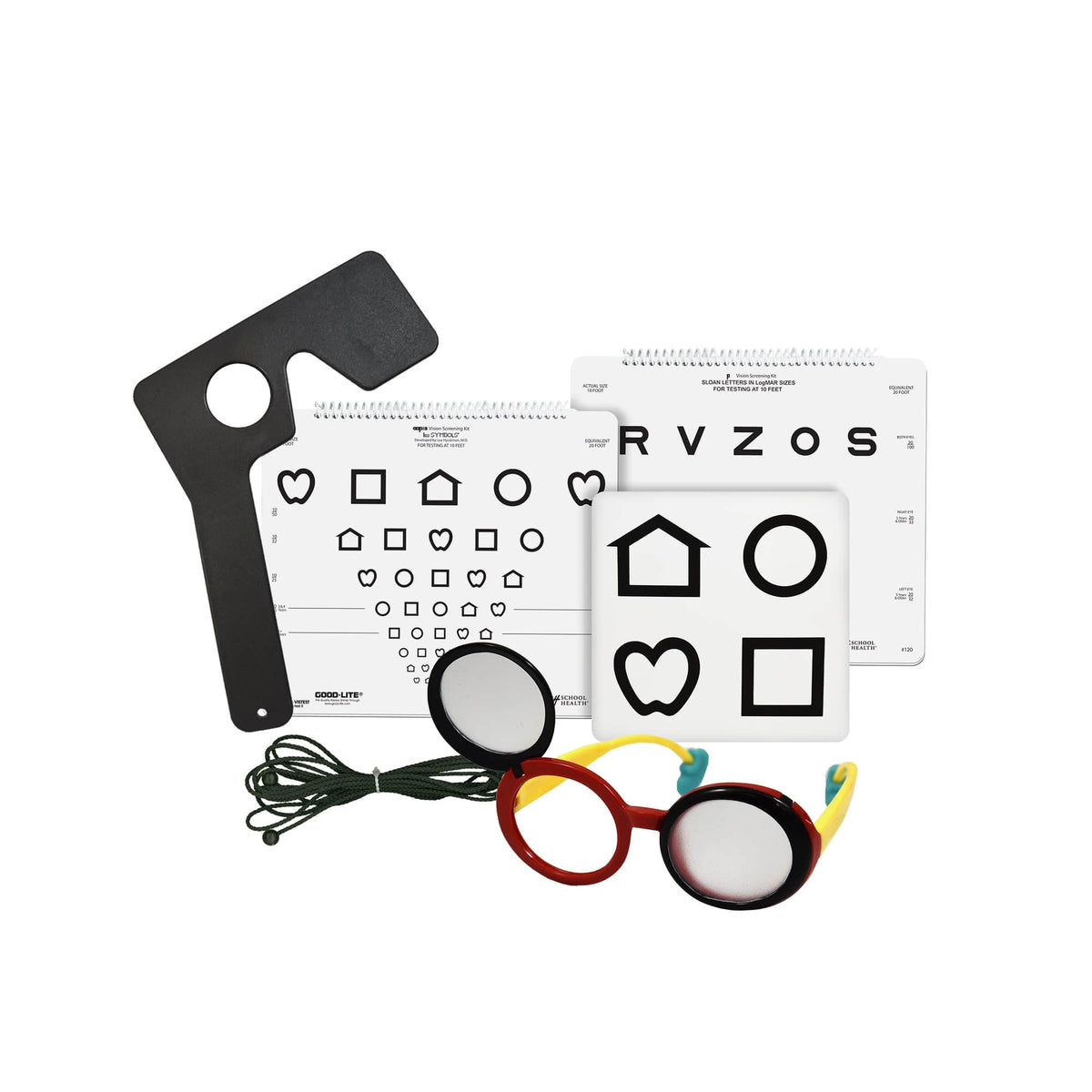
AAPOS: Vision Screening Kit - LEA SYMBOLS® and Sloan Letters (10ft/3m)
A distance screening kit combining LEA SYMBOLS® for younger children with Sloan Letters for children who can identify random letters.
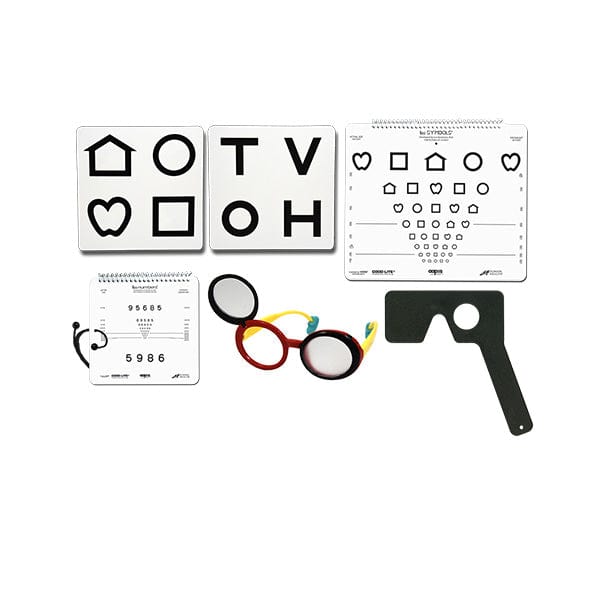
AAPOS: Nurses Near and Distance Vision Kit - LEA SYMBOLS® and LEA NUMBERS® (10ft/3m)-(16"/40cm)
A portable pediatric kit supporting near and distance screening with several age-appropriate optotype options.
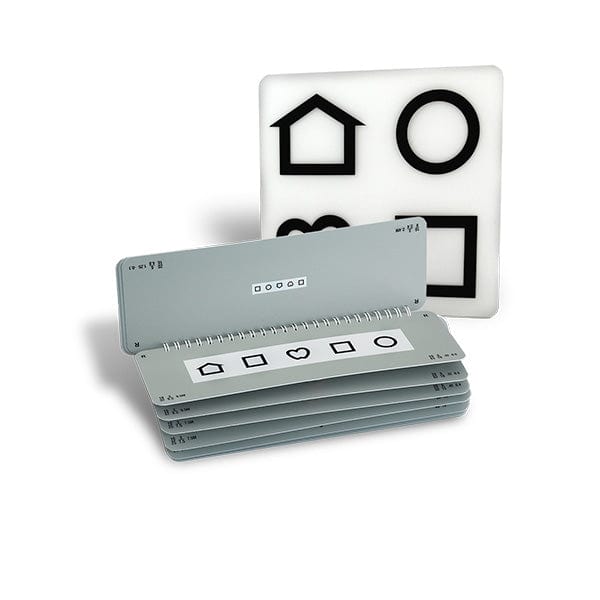
Flip Book: LEA SYMBOLS® Distance Vision Screener (10ft/3m)
A handheld symbol-based flip book designed to make pediatric distance vision screening portable and practical.
Keeping children connected is the larger challenge
The decline in Medi-Cal enrollment does not mean that every child who left the program lost access for the same reason, nor does it mean that federal policy alone caused the decline. The picture described by Capital & Main is more complicated.
What the numbers do illustrate is how easily preventive care can be disrupted when families become disconnected from coverage, health providers, or public programs.
For children's vision, preserving opportunities for screening is one part of the response. Pediatric practices, schools, and community programs can provide additional points where a potential problem may be recognized, particularly for children whose contact with routine health care has become less consistent.
But identifying a concern is only the beginning. Children who do not pass a screening need access to appropriate follow-up, and families need clear information about the coverage and services available to them. The American Academy of Ophthalmology likewise emphasizes that children who do not pass screening should be referred for appropriate ophthalmological evaluation.
Health coverage is valuable because of the care it makes possible. For children, protecting that connection means more than maintaining eligibility on paper. It means preserving the practical path from preventive care, to screening, to referral, and ultimately to the evaluation or treatment a child may need.
Sources
Mark Kreidler. “Children Are Losing Health Coverage. Federal Cuts Will Make It Worse.” Capital & Main, August 20, 2026. Republished by Daily Kos on August 22, 2026.
American Academy of Ophthalmology. “Vision Screening.”
American Association for Pediatric Ophthalmology and Strabismus. “Vision Screening.”


