




A child who is having trouble seeing clearly at school may not know how to explain what is wrong. In some cases, the child may not realize anything is wrong at all. Instead, parents and teachers may be the first to notice changes such as squinting at the board, moving closer to reading material, rubbing the eyes, complaining of headaches, or avoiding activities that require sustained visual attention.
That is an important point raised by Rachel Spurrier, D.O., a pediatric ophthalmologist at UAB Callahan Eye, in a recent article from the UAB Heersink School of Medicine. Children can adapt to the way they see, particularly when their vision has been that way for a long time or one eye sees better than the other.
“Children will not always tell you they are having a problem with their vision. They often don't know any different or have adapted to the way they see.”
— Rachel Spurrier, D.O., Pediatric Ophthalmologist
Recognizing possible signs of vision problems in children therefore often begins with paying attention to what they do, not simply waiting for them to say that they cannot see clearly.
Signs that may deserve a closer look
Vision difficulties can show up in different ways depending on the child and the task. A student who has trouble seeing something at a distance may squint, close one eye, turn their head, or move closer. During reading or other near activities, adults may notice frequent eye rubbing, headaches, difficulty maintaining attention, or reluctance to continue with visually demanding work.
Parents, teachers, and school health professionals may want to pay attention to behaviors such as:
- Squinting or closing one eye
- Moving unusually close to books, screens, or other objects
- Tilting or turning the head while looking
- Frequent headaches or eye rubbing
- Difficulty reading or avoiding visually demanding activities
- A noticeable change in school performance
- An eye that appears to wander
These signs do not establish that a child has a vision disorder. Headaches, reading difficulty, changes in attention, and school performance can have many possible causes. When these behaviors persist or appear together, however, considering the child's vision can be an appropriate part of determining what may be contributing to the difficulty.
When classroom behavior may provide a clue
A child does not need to say “I can't see the board” for a vision concern to become noticeable. The clue may instead be a change in how the child approaches familiar classroom activities. According to UAB, vision difficulties can affect a child's ability to see the board, read comfortably, maintain visual attention, and keep their place while reading. A student may compensate by moving closer to the material, changing head position, avoiding an activity, or becoming frustrated with work that has become visually uncomfortable.
This is why changes in behavior can be worth discussing with parents, teachers, school health professionals, and an eye care professional when appropriate. The goal is not to assume that a classroom difficulty is caused by vision, but to avoid overlooking vision when the child's behavior suggests it could be contributing.
Vision screening can help identify children who need follow-up
Routine vision screening provides an opportunity to identify children who may be at risk for certain vision problems. Depending on the screening method, concerns associated with nearsightedness, farsightedness, astigmatism, amblyopia, or strabismus may be identified and referred for further evaluation.
A screening is not the same as a comprehensive eye examination, and a passing result should be considered alongside what parents, teachers, and health professionals observe in the child's everyday activities. UAB notes that a comprehensive examination may be appropriate when a child does not pass a screening or when concerns about the child's eyes or vision remain despite the screening result.
The UAB article also cites American Association for Pediatric Ophthalmology and Strabismus guidance recommending regular vision screening throughout childhood, including screening every one to two years after age 5.
Choosing screening tools that fit the child and the setting
Pediatric vision screening depends not only on what is being screened but also on whether the child can reliably complete the test. A young child who does not yet know random letters, for example, may need a different approach from an older student who can readily identify Sloan letters. Good-Lite offers several pediatric screening tools for different screening needs and environments.
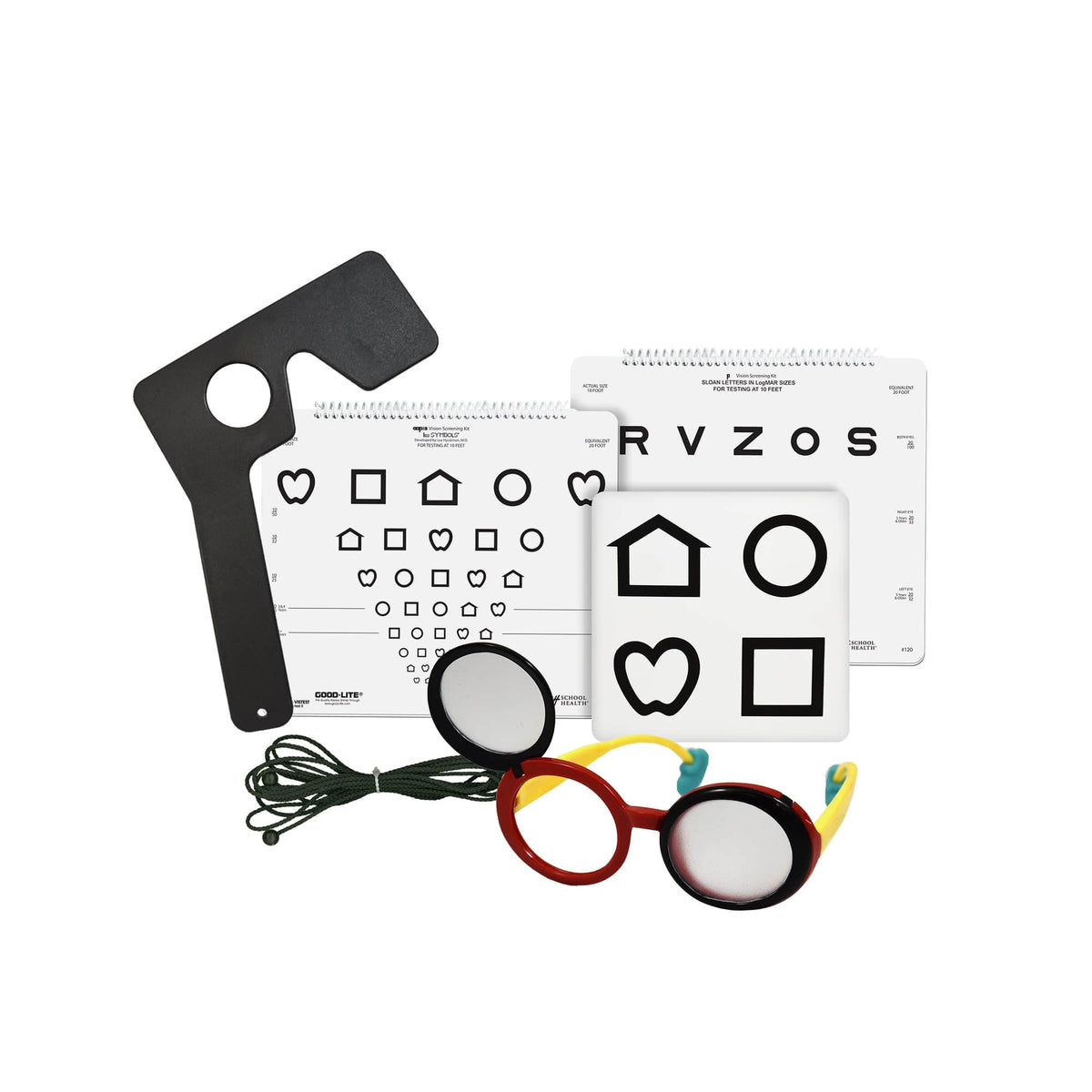
AAPOS: Vision Screening Kit - LEA SYMBOLS® and Sloan Letters (10ft/3m)
A distance vision screening kit for ages 3 through adulthood that combines LEA SYMBOLS® for preschoolers and children who do not yet know random letters with Sloan Letters for children who do.
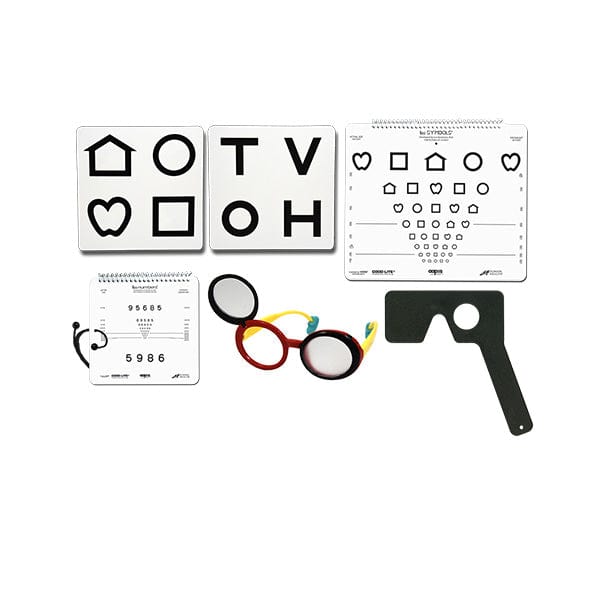
AAPOS: Nurses Near and Distance Vision Kit - LEA SYMBOLS® and LEA NUMBERS® (10ft/3m)-(16"/40cm)
A portable pediatric screening kit for distance and near visual acuity, with 10-foot distance charts and 16-inch near vision charts using multiple age-appropriate optotypes.
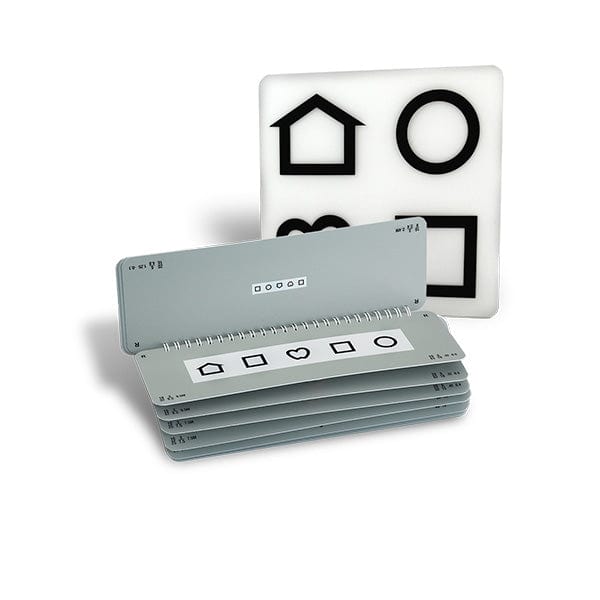
Flip Book: LEA SYMBOLS® Distance Vision Screener (10ft/3m)
A handheld LEA SYMBOLS® distance screener designed for amblyopia screening and for children who have difficulty using standard distance charts.
These tools support vision screening; they are not substitutes for a comprehensive examination when a child fails a screening or when concerns about the child's eyes, vision, or visual functioning continue.
Pay attention when something changes
One of the most useful things adults can do is notice when a child's usual behavior changes. A student who begins moving closer to see classroom material, repeatedly loses their place while reading, starts rubbing their eyes during schoolwork, or suddenly avoids activities they previously completed comfortably may be showing that something deserves further attention.
The behavior itself cannot tell parents or teachers what the cause is, and vision should not automatically be blamed for academic, reading, or attention difficulties. But children do not always recognize or communicate changes in their own vision. When the signs persist, vision screening and, when appropriate, evaluation by an eye care professional can help make sure a possible vision problem is not overlooked.
Source
Grace Bertram. “Is your child struggling to see at school? Signs it may be time for an eye exam.” UAB Heersink School of Medicine, Department of Ophthalmology & Visual Sciences, September 11, 2026.


