




Un enfant peut lire un livre confortablement et avoir toujours des difficultés à voir le tableau de l'autre côté d'une salle de classe. Un adulte peut regarder un téléphone sans problème, mais avoir du mal à lire un panneau routier au loin.
Ce schéma est caractéristique de la myopie. Les objets proches restent relativement clairs, tandis que les objets plus éloignés apparaissent flous.
La myopie est déjà l'un des problèmes de mise au point les plus courants, et sa prévalence augmente depuis des décennies. L'Académie américaine d'ophtalmologie (American Academy of Ophthalmology) indique que les projections suggèrent que près de la moitié de la population mondiale pourrait être myope d'ici 2050.
Cette augmentation a fait de la myopie un problème de vision infantile de plus en plus important. La correction de la vision floue de loin n'est qu'une partie de la conversation, car la myopie peut continuer à progresser à mesure que l'enfant grandit, et des niveaux plus élevés sont associés à un risque accru de problèmes oculaires graves plus tard dans la vie.
La myopie modifie la mise au point de la lumière à l'intérieur de l'œil
Une vision claire dépend de la mise au point précise de la lumière sur la rétine, à l'arrière de l'œil. La lumière traverse d'abord la cornée et le cristallin naturel, qui travaillent ensemble pour la focaliser sur la rétine. La rétine envoie ensuite les informations visuelles au cerveau.
Dans un œil myope, la mise au point se produit devant la rétine au lieu d'être directement sur celle-ci. L'une des raisons courantes est que l'œil est plus long de l'avant vers l'arrière qu'il ne devrait l'être. Une cornée plus incurvée peut également modifier la façon dont la lumière est focalisée.
L'optique peut sembler technique, mais le résultat quotidien est simple. Une feuille de travail tenue à proximité peut paraître claire, tandis que l'écriture de l'autre côté de la pièce semble floue.
La vidéo EyeSmart de l'Académie américaine d'ophtalmologie ci-dessous montre comment la myopie modifie la mise au point de la lumière à l'intérieur de l'œil et pourquoi les objets éloignés apparaissent flous.
La myopie infantile peut être difficile à détecter et progresse souvent
Les enfants ne se plaignent pas toujours lorsqu'ils ne voient pas clairement. Ils peuvent penser que tout le monde voit comme eux, surtout lorsque le changement se développe progressivement, et les jeunes enfants peuvent ne pas avoir le langage nécessaire pour expliquer que les objets éloignés semblent flous.
Les signes courants peuvent inclure le plissement des yeux, la fatigue oculaire, les maux de tête et la difficulté à voir des objets éloignés tels que les tableaux de classe ou les panneaux routiers. Un enfant peut s'approcher de la télévision, préférer s'asseoir près de l'avant de la classe ou avoir des difficultés à reconnaître au loin quelque chose que ses camarades de classe peuvent voir facilement. Ces comportements ne signifient pas automatiquement qu'un enfant est myope, mais ils peuvent être des indices utiles.
La myopie est souvent diagnostiquée entre 8 et 12 ans, bien qu'elle puisse commencer plus tôt ou apparaître pour la première fois à l'adolescence. Une fois qu'elle se développe, la condition s'aggrave souvent pendant les années scolaires et l'adolescence à mesure que l'œil continue de croître.
La prescription de lunettes peut changer à mesure que l'œil s'allonge, la progression devenant souvent plus stable au début de l'âge adulte. La myopie est mesurée en dioptries, la myopie légère ou faible étant généralement inférieure à 3 dioptries, la myopie modérée entre environ 3 et 6 dioptries, et plus de 6 dioptries étant généralement considérée comme une myopie forte.
Ces catégories sont importantes car une myopie croissante représente plus qu'une simple prescription plus forte. Un allongement plus important de l'œil est associé à une probabilité plus élevée d'autres problèmes oculaires plus tard dans la vie.
La génétique, l'environnement et le risque à long terme sont tous importants
La myopie est souvent héréditaire. Un enfant ayant un parent myope a plus de chances de développer une myopie, mais l'hérédité n'explique pas tous les cas, et les enfants dont les parents ne sont pas myopes peuvent également le devenir. La condition reflète probablement une combinaison d'influences génétiques et environnementales.
Le temps passé à l'extérieur a reçu une attention particulière. Plus de temps passé à l'intérieur est associé à un risque accru de myopie infantile, tandis que passer du temps à l'extérieur à la lumière naturelle semble avoir une association protectrice. Cela ne signifie pas que chaque enfant qui utilise des écrans ou passe beaucoup de temps à l'intérieur développera une myopie, mais cela renforce l'idée que le développement oculaire est influencé à la fois par la biologie et l'environnement.
Pour de nombreuses personnes, la première préoccupation concernant la myopie est simplement de voir suffisamment clairement pour fonctionner à l'école, au travail ou en conduisant. Les lunettes ou les lentilles de contact peuvent résoudre très efficacement ce problème immédiat, mais des niveaux de myopie plus élevés sont associés à un risque accru d'autres affections oculaires.
Les personnes atteintes de myopie ont un risque plus élevé de décollement de la rétine, et ce risque augmente avec la gravité. Un décollement de la rétine se produit lorsque la rétine se sépare de la paroi arrière de l'œil et peut menacer la vision s'il n'est pas traité. Une myopie sévère est également associée à un risque plus élevé de glaucome, de cataracte et d'autres maladies oculaires.
C'est l'une des raisons pour lesquelles le contrôle de la myopie est devenu de plus en plus important en ophtalmologie pédiatrique. L'objectif n'est pas simplement de maintenir une future prescription de lunettes plus basse. Le ralentissement de la croissance excessive de l'œil peut également réduire la probabilité qu'un enfant atteigne des niveaux de myopie plus élevés associés à un risque accru tout au long de sa vie.
Le dépistage et le diagnostic peuvent identifier les problèmes tôt
Un examen oculaire complet peut diagnostiquer la myopie, mais un enfant n'a pas besoin de connaître les lettres avant que sa vision de loin puisse être évaluée. Les enfants plus âgés et les adultes peuvent participer à des tests d'acuité visuelle familiers et à la mesure de la prescription, tandis que les jeunes enfants peuvent être évalués avec des optotypes adaptés à l'âge et des méthodes objectives telles que la rétinoscopie.
La rétinoscopie permet à un professionnel de la vue d'estimer l'erreur de réfraction en observant la façon dont la lumière se réfléchit à l'intérieur de l'œil. C'est important car attendre qu'un enfant puisse clairement décrire une vision floue peut retarder la reconnaissance d'un problème.
Le dépistage ne diagnostique pas la myopie, mais il peut aider à identifier les enfants dont l'acuité visuelle de loin suggère qu'un examen oculaire complet est nécessaire. Comme la myopie affecte principalement la vision de loin, le dépistage de l'acuité visuelle peut fournir une première indication importante qu'un enfant ne voit pas aussi clairement de l'autre côté de la pièce qu'il le devrait.
Good-Lite propose plusieurs outils conçus pour le dépistage de l'acuité visuelle de loin chez les enfants. Ces produits soutiennent les programmes de dépistage et aident à identifier les enfants qui devraient être orientés vers un examen oculaire complet. Ils ne diagnostiquent pas la myopie et ne remplacent pas les soins oculaires professionnels.
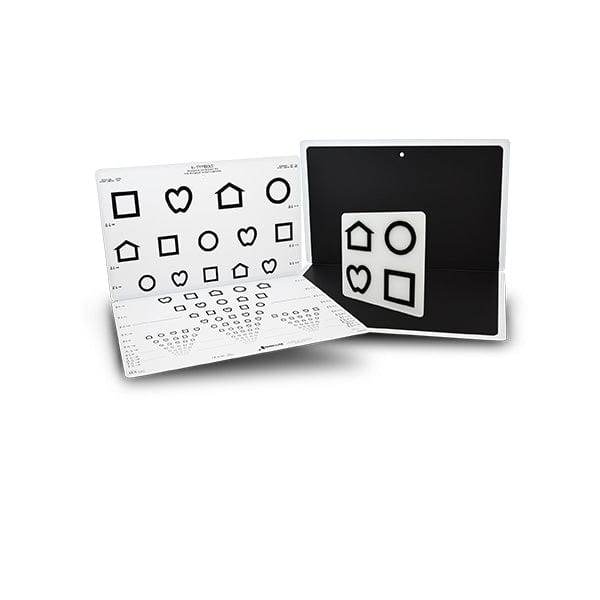
Tableau de distance 15 lignes LEA SYMBOLS®
Conçu pour le dépistage de la vision scolaire et l'évaluation à partir de 3 ans, avec des LEA SYMBOLS® proportionnellement espacés et une distance de test de 10 pieds.

Kit de dépistage visuel AAPOS
Un kit de dépistage complet de 10 pieds avec des symboles LEA SYMBOLS® et des lettres Sloan, du matériel de réponse, des outils d'occlusion et des accessoires de distance de dépistage.

Portail de dépistage visuel en ligne GLD-Vision®
Un système de dépistage scolaire basé sur le web conçu pour évaluer l'acuité visuelle et d'autres aspects de la vision par un court exercice d'appariement.
Un enfant qui ne répond pas aux critères de dépistage doit être orienté vers une évaluation plus approfondie. Le dépistage peut identifier un problème possible, mais déterminer si la cause est la myopie, une autre erreur de réfraction ou une autre affection oculaire nécessite un examen complet.
La myopie mérite d'être prise en charge avant que la prescription ne devienne élevée
Il est facile de considérer la myopie comme un simple problème de lunettes, car la vision floue de loin peut souvent être corrigée rapidement. Mais la situation à plus long terme est plus importante.
La myopie débute souvent pendant l'enfance, peut devenir progressivement plus forte à mesure que l'œil grandit, et peut augmenter le risque de maladies rétiniennes et d'autres affections oculaires plus tard dans la vie lorsqu'elle devient sévère. Une reconnaissance précoce donne aux familles et aux professionnels des soins oculaires plus d'informations sur le développement de la vision d'un enfant.
Le dépistage visuel peut aider à identifier les enfants qui ont besoin d'être orientés, un examen complet peut déterminer si la myopie ou une autre condition est responsable, et une correction appropriée peut fournir une vision plus claire immédiatement. Lorsque la progression est une préoccupation, les options de contrôle de la myopie peuvent également être envisagées.
Aucune approche unique ne convient à chaque enfant. L'âge, la prescription, le taux de changement, les antécédents familiaux, la santé oculaire et la capacité à utiliser un traitement en toute sécurité sont tous importants. L'objectif n'est pas simplement d'aider un enfant à lire le tableau aujourd'hui, mais de reconnaître les changements tôt, de comprendre comment les yeux se développent et de prendre des décisions éclairées qui soutiennent la vision au cours des années à venir.
Sources
Académie américaine d'ophtalmologie. Myopie : Qu'est-ce que la myopie ? Révisé par Brenda Pagan-Duran, M.D. Publié le 12 janvier 2026.
https://www.aao.org/eye-health/diseases/myopia-nearsightedness


